

Hey there! As a supplier of Custom Power Transformers, I often get asked about the materials we use to make these essential pieces of equipment. So, I thought I'd take a moment to break it down for you.
Core Materials
The core of a power transformer is like its heart. It's where the magic of electromagnetic induction happens. The most common material used for transformer cores is silicon steel. Why silicon steel? Well, it has some pretty awesome properties.
Silicon steel has low hysteresis loss, which means it doesn't waste a lot of energy as heat when the magnetic field in the core changes. This is super important because we want our transformers to be as efficient as possible. Also, it has high magnetic permeability, which allows the magnetic field to pass through it easily. This helps in the transfer of electrical energy from the primary winding to the secondary winding.
Another material that's sometimes used for special applications is amorphous metal. Amorphous metal cores have even lower losses than silicon steel cores. They're made by rapidly cooling a molten metal alloy, which gives them a non - crystalline structure. This unique structure results in very low eddy current losses. However, they're more expensive to produce, so they're typically used in high - efficiency or specialized transformers.
Winding Materials
The windings in a power transformer are responsible for carrying the electrical current. The most commonly used material for windings is copper. Copper is an excellent conductor of electricity. It has low resistivity, which means that it allows the current to flow through it with minimal resistance. This reduces the amount of heat generated in the windings, which is crucial for the long - term performance and reliability of the transformer.
Copper is also very ductile, which means it can be easily drawn into thin wires. This is important because we need to be able to wind the copper wire around the core to create the primary and secondary windings. Additionally, copper has good corrosion resistance, which helps to protect the windings from environmental factors.
In some cases, aluminum is used as an alternative to copper for windings. Aluminum is lighter and less expensive than copper. It's a decent conductor of electricity, but it has a higher resistivity than copper. So, for the same amount of current - carrying capacity, aluminum windings need to be larger in cross - sectional area compared to copper windings. However, in applications where weight and cost are major considerations, such as in some large - scale power distribution transformers, aluminum windings can be a good choice.
Insulating Materials
Insulating materials are essential in power transformers to prevent electrical short - circuits between the windings and the core, as well as between different parts of the windings themselves. One of the most widely used insulating materials is paper. Transformer paper is specially treated to have high dielectric strength and good moisture resistance. It's wrapped around the windings to provide electrical insulation.
Mineral oil is another important insulating material. It not only provides electrical insulation but also helps in cooling the transformer. The oil fills the transformer tank and surrounds the core and windings. It has good heat - transfer properties, which allows it to carry away the heat generated in the core and windings. Mineral oil also has good dielectric properties, which help to prevent electrical breakdown.
In recent years, there has been a growing interest in using alternative insulating fluids, such as synthetic esters and natural esters. These esters have several advantages over mineral oil. They're more environmentally friendly, as they're biodegradable. They also have better fire - resistance properties, which can be a major safety advantage, especially in indoor or urban installations.
Tank and Structural Materials
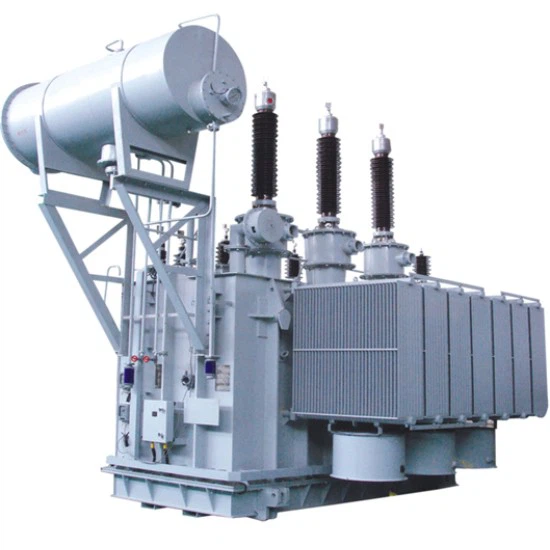
The tank of a power transformer is used to house the core, windings, and insulating oil. It needs to be strong and durable to protect the internal components from mechanical damage and environmental factors. Steel is the most commonly used material for transformer tanks. It has high strength and can withstand the pressure and forces exerted during normal operation and in case of short - circuits.
The tank is usually painted to protect it from corrosion. Galvanized steel is also sometimes used, which provides an additional layer of corrosion protection. Inside the tank, there are also various structural components, such as supports and brackets, which are typically made of steel or other metals. These components help to hold the core and windings in place and ensure the proper alignment of the transformer.

Other Materials
There are also some other materials used in power transformers. For example, gaskets and seals are used to prevent the leakage of insulating oil from the tank. These are typically made of rubber or other elastomeric materials. Bushings are used to bring the electrical connections out of the transformer tank. They're made of materials like porcelain or composite materials, which provide electrical insulation and mechanical support.
Now, depending on the specific requirements of a custom power transformer, different combinations of these materials can be used. For example, if you need a Ac Power Transformer for a high - voltage application, you might need a transformer with a high - quality silicon steel core, copper windings, and advanced insulating materials to ensure reliable performance. Similarly, a High Voltage Power Transformer or a Unit Substation Transformer might have specific material requirements based on its voltage rating, power capacity, and installation environment.
If you're in the market for a custom power transformer, whether it's for a small - scale industrial application or a large - scale power grid project, we're here to help. We have the expertise and the resources to select the right materials and design a transformer that meets your exact needs. Don't hesitate to reach out to us for more information or to start a procurement discussion. We're always happy to talk about how we can provide you with the best custom power transformer solution.
References
- "Transformer Engineering: Design, Technology, and Diagnostics" by J. Singhal
- "Power System Analysis and Design" by J. Duncan Glover, Mulukutla S. Sarma, and Thomas J. Overbye