

Insulation materials play a crucial role in the performance and longevity of large power transformers. As a leading supplier of large power transformers, we understand the significance of using high - quality insulation materials to ensure the safe and efficient operation of these vital electrical components. In this blog, we will explore the various insulation materials commonly used in large power transformers.
Mineral Oil
Mineral oil is one of the most widely used insulation materials in large power transformers. It offers excellent electrical insulation properties, high dielectric strength, and good heat transfer capabilities. The dielectric strength of mineral oil allows it to withstand high voltages without breaking down, which is essential for the safe operation of transformers.
In addition to its electrical properties, mineral oil also serves as a coolant. It absorbs the heat generated by the transformer's core and windings and transfers it to the cooling system. This helps to maintain the transformer's temperature within a safe operating range, preventing overheating and potential damage.
However, mineral oil has some limitations. It is flammable, which poses a fire risk. In recent years, there has been a growing concern about the environmental impact of mineral oil spills. To address these issues, alternative insulation fluids are being developed and used in some applications.
Paper Insulation
Paper insulation is another key component in large power transformers. Kraft paper, a type of high - quality paper made from wood pulp, is commonly used. It is wrapped around the transformer's windings to provide electrical insulation between the turns of the wire.
Paper insulation has several advantages. It is a natural and renewable material, which makes it environmentally friendly. It also has good mechanical strength, which helps to hold the windings in place and protect them from mechanical stress.
When combined with mineral oil, paper insulation forms a composite insulation system. The oil impregnates the paper, filling the voids and improving its dielectric properties. This composite system has been proven to be highly effective in providing long - term insulation for power transformers.
Synthetic Fluids
Synthetic fluids are becoming increasingly popular as an alternative to mineral oil in large power transformers. There are several types of synthetic fluids, including silicone fluids and ester - based fluids.
Silicone fluids have excellent thermal stability, high dielectric strength, and are non - flammable. They can operate at higher temperatures than mineral oil, which allows for more compact transformer designs. Silicone fluids also have good environmental properties, as they are less likely to cause pollution in case of a spill.
Ester - based fluids are another type of synthetic fluid. They can be either natural esters (derived from vegetable oils) or synthetic esters. Ester fluids have high fire resistance, good biodegradability, and excellent dielectric properties. They are also compatible with paper insulation, making them a suitable replacement for mineral oil in many applications.
Epoxy Resins
Epoxy resins are used in large power transformers for various insulation purposes. They are often used to encapsulate the transformer's windings or to form insulating barriers.
Epoxy resins have high mechanical strength, good electrical insulation properties, and excellent chemical resistance. They can be molded into complex shapes, which allows for customized insulation solutions. Epoxy - encapsulated transformers are often used in applications where a high degree of protection against environmental factors such as moisture, dust, and chemicals is required.
Gas Insulation
Gas insulation is an emerging technology in large power transformers. Sulfur hexafluoride (SF6) gas is commonly used as an insulating medium. SF6 gas has extremely high dielectric strength, which allows for the design of compact and high - voltage transformers.
It also has good arc - quenching properties, which is important for the safe operation of the transformer under fault conditions. However, SF6 is a greenhouse gas with a high global warming potential. As a result, there is a growing effort to develop alternative gas insulation materials with lower environmental impact.
Comparison of Insulation Materials
Each insulation material has its own set of advantages and disadvantages. When selecting an insulation material for a large power transformer, several factors need to be considered, including electrical performance, thermal performance, mechanical strength, fire resistance, environmental impact, and cost.
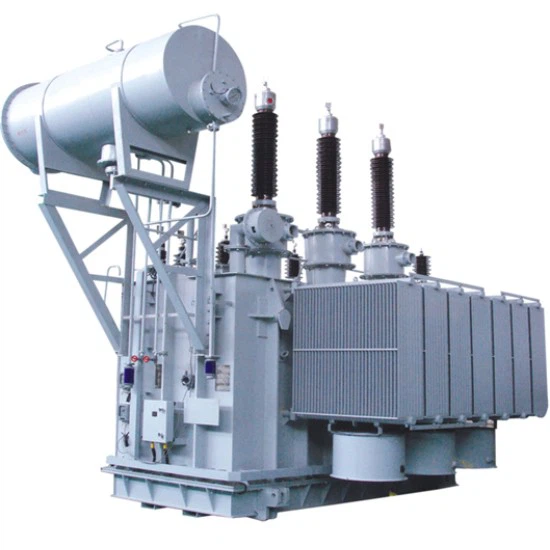

Mineral oil and paper insulation have been used for many years and have a proven track record of reliability. However, their flammability and potential environmental impact are concerns. Synthetic fluids offer improved fire resistance and environmental properties, but they may be more expensive. Epoxy resins provide good mechanical and electrical insulation, but they may have limitations in terms of heat dissipation. Gas insulation allows for compact designs but has environmental issues.
Our Commitment as a Supplier
As a large power transformer supplier, we are committed to using the best insulation materials to meet the diverse needs of our customers. We stay up - to - date with the latest research and development in insulation technology to ensure that our transformers are not only reliable but also environmentally friendly.
We offer a wide range of large power transformers, including High Voltage Power Transformer, Ac Power Transformer, and Custom Power Transformers. Our experienced engineers can work with you to select the most appropriate insulation materials based on your specific requirements.
Contact Us for Procurement
If you are in the market for large power transformers and want to learn more about the insulation materials used in our products, we encourage you to contact us. Our sales team is ready to provide you with detailed information and assist you in the procurement process. Whether you need a standard transformer or a custom - designed solution, we have the expertise and resources to meet your needs.
References
- "Transformer Engineering: Design, Technology, and Diagnostics" by J. R. Lucas
- "Electrical Insulation for Rotating Machines: Design, Evaluation, Aging, Testing, and Repair" by G. C. Stone, E. A. Boulter, I. Culbert, and L. S. Schellenberg
- Technical papers from IEEE (Institute of Electrical and Electronics Engineers) on power transformer insulation materials.