

Hey there! As a supplier of Ac Power Transformers, I've seen my fair share of issues with these essential pieces of equipment. Detecting internal faults in an AC power transformer is crucial for maintaining its efficiency and preventing costly breakdowns. In this blog, I'll share some practical ways to spot those pesky internal faults.
First off, let's understand why detecting internal faults is so important. An AC power transformer is a key component in electrical systems, stepping up or stepping down voltage as needed. When there's an internal fault, it can not only disrupt power supply but also pose a safety risk. Faults can lead to overheating, short - circuits, and even explosions in extreme cases. So, early detection is definitely the name of the game.
One of the most common methods to detect internal faults is through oil analysis. Transformers use insulating oil to cool and insulate the windings. Over time, when there's an internal fault, the oil can break down and produce certain gases. By analyzing the dissolved gases in the oil, we can get a pretty good idea of what's going on inside the transformer. For example, methane, ethane, and ethylene are often associated with thermal faults, while acetylene is a sign of arcing.
To perform oil analysis, we take a sample of the insulating oil from the transformer. There are special kits available that make it relatively easy to extract the oil without contaminating it. Once we have the sample, we send it to a lab for detailed analysis. The lab technicians use gas chromatography to separate and measure the different gases present in the oil. Based on the gas concentrations and their ratios, we can determine the type and severity of the fault.
Another effective way to detect internal faults is by monitoring the temperature of the transformer. Overheating is a clear sign that something's not right. We can use temperature sensors placed at different locations on the transformer, such as on the windings and the oil tank. These sensors continuously measure the temperature and send the data to a monitoring system.
If the temperature exceeds the normal operating range, it could indicate a fault. For instance, a short - circuit in the windings can cause a sudden increase in current, which in turn leads to excessive heat generation. By setting up alarms in the monitoring system, we can be notified immediately when the temperature crosses a certain threshold. This allows us to take action before the fault causes serious damage.
Partial discharge detection is also a valuable technique. Partial discharges are small electrical discharges that occur within the insulation of the transformer. They can be caused by factors like insulation degradation, voids in the insulation, or high - voltage stress. These discharges can gradually damage the insulation over time, leading to more severe faults.
To detect partial discharges, we use specialized sensors that can pick up the electrical signals generated by the discharges. There are different types of sensors available, such as capacitive sensors and acoustic sensors. Capacitive sensors detect the electrical field changes caused by partial discharges, while acoustic sensors listen for the ultrasonic sounds produced during the discharges.
Once the sensors detect a partial discharge, the monitoring system records the data, including the magnitude and frequency of the discharges. By analyzing this data, we can determine the location and severity of the partial discharge. If the partial discharge activity is increasing over time, it's a sign that the insulation is deteriorating, and we need to take steps to address the issue.
In addition to these methods, visual inspection is still an important part of fault detection. Regularly inspecting the transformer for physical damage, such as cracks in the tank, leaks in the oil, or loose connections, can help us catch potential problems early. We also check the cooling system to make sure it's working properly. A malfunctioning cooling system can cause the transformer to overheat, even if there's no internal electrical fault.
Now, let's talk about some of the products we offer at our company. We have a great range of High Voltage Power Transformer that are designed to handle high - voltage applications. These transformers are built with high - quality materials and advanced manufacturing techniques to ensure reliable performance.
If you have specific requirements, we also provide Custom Power Transformers. Our team of experts can work with you to design and build a transformer that meets your exact needs. Whether it's a unique voltage rating, a special size, or specific performance requirements, we've got you covered.
Of course, our main product is the Ac Power Transformer. These transformers are used in a wide variety of applications, from industrial plants to commercial buildings. They are known for their efficiency, durability, and safety.
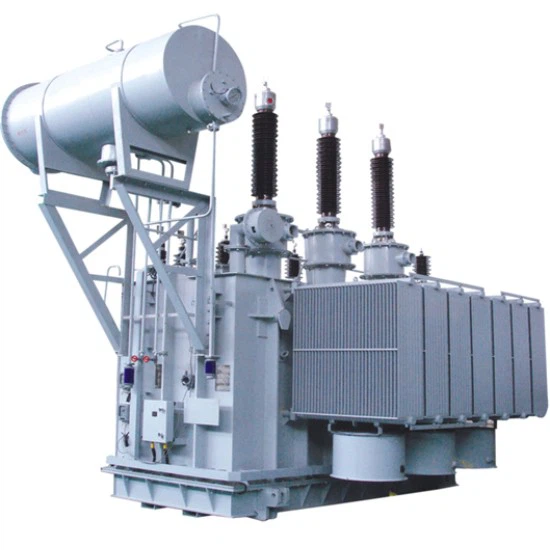

If you're in the market for a new AC power transformer or need help with fault detection and maintenance, don't hesitate to reach out. We have a team of experienced professionals who can provide you with the best advice and solutions. Whether you're a small business or a large corporation, we can offer you the right products and services to meet your power needs.
In conclusion, detecting internal faults in an AC power transformer is a multi - step process that involves various techniques. By using oil analysis, temperature monitoring, partial discharge detection, and visual inspection, we can identify faults early and take the necessary steps to prevent major breakdowns. And if you're looking for high - quality transformers, we're here to help. Contact us today to start the conversation about your power transformer needs.
References
- Electrical Power Systems: Design and Analysis by Turan Gonen
- Power System Protection and Switchgear by C. L. Wadhwa