

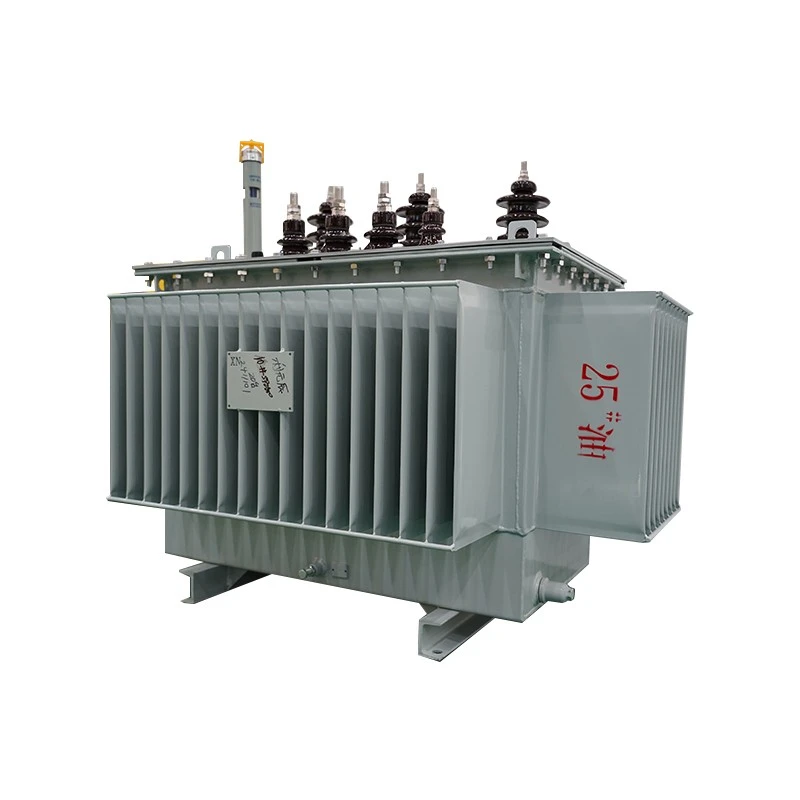
Hey there! As a supplier of amorphous metal cores, I often get asked about how to adjust the remanence of these cores. Remanence, in simple terms, is the magnetic field that remains in a material after the external magnetic field is removed. It's a crucial property, especially when it comes to applications like Oil Immersed Transformers, Oil Immersed Self Cooled Transformer, and Oil Immersed Hermetically Sealed Type Transformer. So, let's dive into the ways we can tweak this property.
Understanding Amorphous Metal Cores
First off, let's talk a bit about amorphous metal cores. These cores are made from amorphous metals, which have a non - crystalline atomic structure. This gives them some pretty cool properties, like low core loss and high magnetic permeability. But the remanence can vary depending on a bunch of factors, and that's what we're here to figure out how to control.
Factors Affecting Remanence
Heat Treatment
One of the most effective ways to adjust the remanence of an amorphous metal core is through heat treatment. When we heat the core to a specific temperature and then cool it at a controlled rate, we can change its magnetic properties. For example, if we heat the core to a temperature close to its crystallization temperature and then cool it slowly, we can increase the remanence. This is because the slow cooling allows the atoms to arrange themselves in a way that promotes a stronger magnetic field to be retained.
On the other hand, if we want to decrease the remanence, we can heat the core to a lower temperature and cool it rapidly. The rapid cooling freezes the atoms in a more disordered state, reducing the ability of the core to hold a magnetic field after the external field is removed.

Alloy Composition
The alloy composition of the amorphous metal also plays a big role in determining the remanence. Different elements in the alloy can interact with each other in various ways to affect the magnetic properties. For instance, adding small amounts of certain elements like cobalt or nickel can increase the remanence. These elements have strong magnetic moments, and when they're incorporated into the amorphous structure, they can enhance the overall magnetic field that the core can retain.
Conversely, some elements can be added to reduce the remanence. For example, adding a small amount of silicon can decrease the magnetic interaction between the atoms in the alloy, leading to a lower remanence. Adjusting the alloy composition is a bit like a chemistry experiment, but with the goal of getting the perfect remanence for a specific application.
Stress
Stress in the amorphous metal core can also have a significant impact on remanence. When we apply mechanical stress to the core, it can change the magnetic domain structure. Compressive stress, for example, can align the magnetic domains in a way that increases the remanence. This is because the stress forces the atoms to be closer together, which enhances the magnetic interaction between them.
Tensile stress, on the other hand, can have the opposite effect. It can pull the atoms apart, disrupting the magnetic domain alignment and reducing the remanence. So, if we want to adjust the remanence, we can apply either compressive or tensile stress to the core during the manufacturing process.
Measuring Remanence
Before we can adjust the remanence, we need to know what it is. There are several ways to measure the remanence of an amorphous metal core. One common method is using a magnetometer. A magnetometer can measure the magnetic field strength of the core after the external magnetic field is removed. This gives us a quantitative value for the remanence.
Another way is through hysteresis loop measurement. By plotting the relationship between the magnetic field strength and the magnetic flux density of the core, we can determine the remanence from the hysteresis loop. The point where the loop intersects the magnetic flux density axis when the external magnetic field is zero is the remanence.
Applications and the Importance of Remanence Adjustment
In applications like Oil Immersed Transformers, the remanence of the amorphous metal core can affect the performance of the transformer. If the remanence is too high, it can cause problems like inrush current when the transformer is switched on. This inrush current can be large enough to damage the transformer or other components in the electrical system.
On the other hand, if the remanence is too low, the transformer may not be able to store enough magnetic energy, which can lead to reduced efficiency. So, by adjusting the remanence to an optimal value, we can improve the performance and reliability of the transformer.
The same goes for Oil Immersed Self Cooled Transformer and Oil Immersed Hermetically Sealed Type Transformer. These transformers rely on the proper magnetic properties of the core to function efficiently, and remanence adjustment is a key part of achieving that.
Practical Tips for Adjusting Remanence
Precise Temperature Control
When doing heat treatment, it's super important to have precise temperature control. Even a small deviation in the temperature can lead to significant changes in the remanence. We use high - precision temperature sensors and heating equipment to make sure we're hitting the right temperature and holding it for the correct amount of time.
Quality Control in Alloying
During the alloying process, we need to have strict quality control. We use advanced analytical techniques to ensure that the alloy composition is exactly what we want. This includes techniques like spectroscopy, which can accurately measure the amount of each element in the alloy.
Stress Management
Managing stress in the core is also crucial. We use special manufacturing processes to apply the right amount of stress. For example, we can use mechanical fixtures to apply compressive or tensile stress during the winding or assembly of the core.
Conclusion
Adjusting the remanence of an amorphous metal core is a complex but achievable task. By understanding the factors like heat treatment, alloy composition, and stress, and by using the right measurement and control techniques, we can fine - tune the remanence to meet the specific requirements of different applications. Whether it's for Oil Immersed Transformers, Oil Immersed Self Cooled Transformer, or Oil Immersed Hermetically Sealed Type Transformer, getting the remanence right can make a huge difference in the performance and reliability of the equipment.
If you're in the market for high - quality amorphous metal cores with precisely adjusted remanence, we're here to help. We've got the expertise and the technology to provide you with the perfect solution for your needs. Reach out to us for more information and to start a procurement discussion.
References
- Cullity, B. D., & Graham, C. D. (2008). Introduction to Magnetic Materials. Wiley.
- O'Handley, R. C. (2000). Modern Magnetic Materials: Principles and Applications. Wiley.